


A regular and professional playground inspection is a matter of course for responsible playground owners, as negligence can quickly lead to accidents and seriously endanger children. In Germany, there is also a legal obligation to inspect playgrounds. Similar regulations exist in neighboring countries such as Austria and Switzerland.
Inhalt
The playground owner is obligated to carry out inspections
Within the scope of the duty of care, the owner of a playground is responsible for its technical safety. Standard EN 1176 specifies the measures required for technical safety and what constitutes a proper inspection. Violations of the duty of care can, according to § 823 of the German Civil Code, result in liability for damages.
A playground inspector must identify all defects on a playground that pose a safety risk. These include, among others:
- sharp edges
- splinters
- protruding or broken parts
- shards and other debris
- defective equipment
- wear and tear of equipment or surfaces
- instability of equipment
- toxic plants
- rot or corrosion
Wood protection is of significant importance for playground equipment
Wood is a popular material for playground equipment. However, wood is at risk of rot or internal damage, which can reduce stability and lead to accidents. Therefore, certain measures should be taken in advance to protect the wood and prevent rot. For example, water must not accumulate on wooden surfaces, so they should be sloped or angled. Impregnation with wood preservatives is theoretically possible and was commonly used in the past. Such chemical wood treatment, however, should generally no longer be applied to playground equipment today.

Proper inspection of wooden playground equipment
During regular playground inspections, checking wooden equipment plays a particularly important role and must be carried out by a knowledgeable person. A visual inspection alone is not sufficient. If fungal fruiting bodies are visible on the surface, the wood defect is already too severe and safety can no longer be ensured. Internal rot or loss of substance, for example due to insect damage, is then so advanced that the remaining wall thickness is extremely low and the wooden equipment is at risk of collapsing.
Another inspection method is the tapping method. The inspector taps various areas of the wooden equipment with a soft hammer and assesses the internal condition of the wood based on the sound. This method, however, only allows a preliminary assessment and localization of possible rot spots. Precise defect measurement is not possible. Tapping cannot be performed on parts of the wood below ground level, which is precisely where the risk of fungal penetration and wood decay is highest. This area is critical because it is in contact with the moist soil.
Drill resistance measurement as the preferred method for inspecting wooden playground equipment
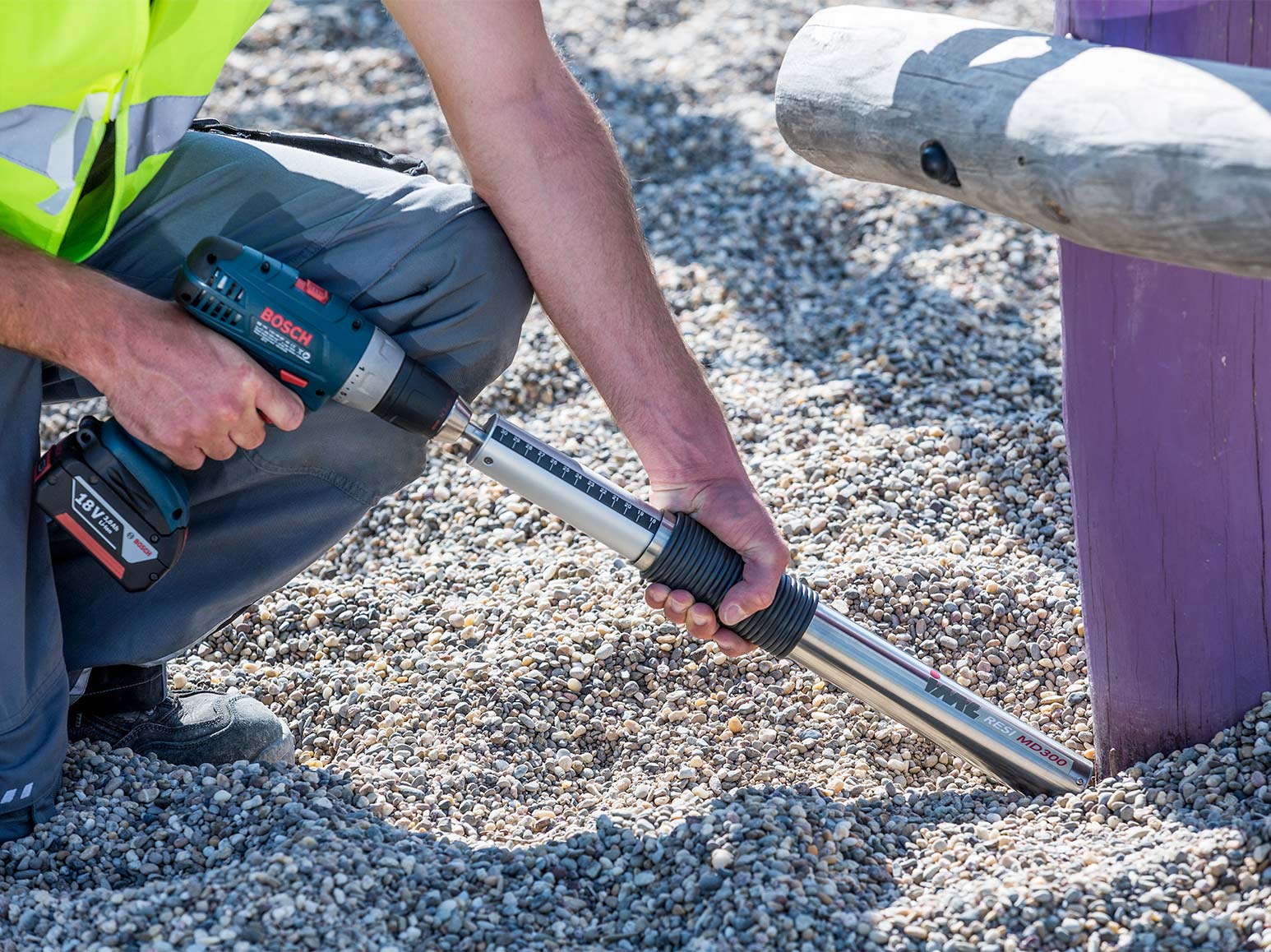
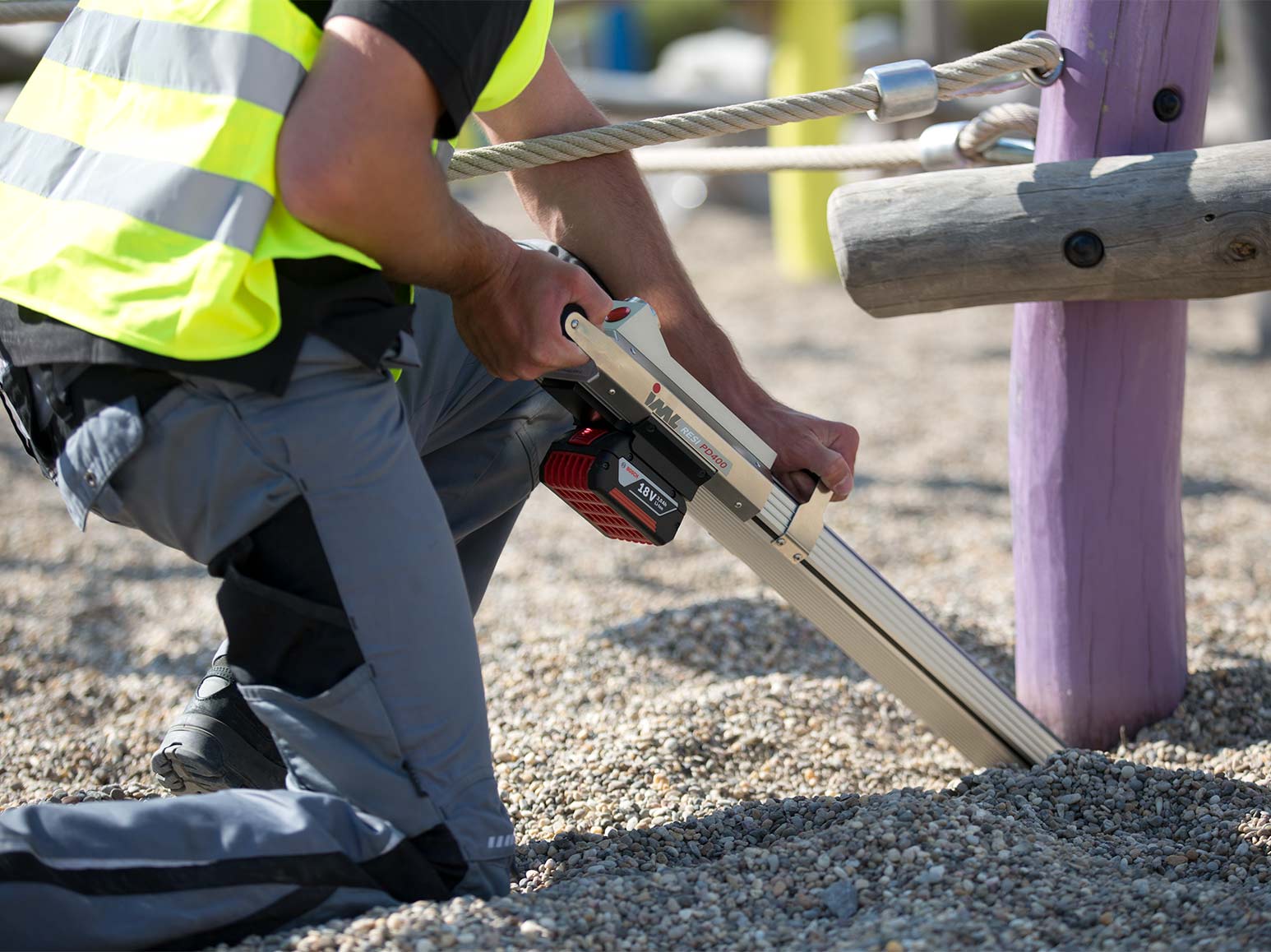
In addition to a visual inspection and the tapping method, drill resistance measurement is recommended, as it provides a clear and objective assessment of the wood’s internal condition. IML-RESI series drill resistance devices can also assess wood below ground level. With integrated front adapters, this is possible without exposing the post. The drill resistance device inserts a 3 mm thin probe into the wood and records the resistance, which is displayed either as a curve on a screen or on weatherproof wax paper, depending on the model. The IML-RESI PowerDrill can often detect fungal infestation even more precisely and earlier, as it measures both drill resistance and feed force. Drill resistance measurement allows the playground inspector to identify internal wood damage in time and take appropriate measures to prevent unnecessary accidents.

Playground safety – playground and equipment inspections with IML wood testing systems. Playground safety – inspection of playgrounds and wooden equipment using IML wood testing systems.
Seminars on proper drill resistance measurement
IML offers seminars on the use of IML-RESI drill resistance devices for inspecting wooden playground equipment and interpreting the resulting curves. Proper use of the wood testing systems and correct analysis of the measurements are crucial for an accurate assessment of the wood condition in playground equipment.